
Xinhua Interview with Professor Daping Chu | Cambridge University Nanjing Centre of Technology and Innovation: Aiming at the World's Scientific Frontiers and Acting as a Bridge for Resource Sharing
CUNJC News · 2026/11/6 · 11 次浏览
In late September, Professor Daping Chu, tenured Chair Professor at the University of Cambridge and Academic Director and CEO of the Cambridge University Nanjing Centre of Technology and Innovation, gave an exclusive interview to the Xinhuanet Jiangsu Channel on the topic of international cooperation and technology transfer and commercialisation. The full text is reproduced below: In 2018, the Cambridge University Nanjing Centre of Technology and Innovation (hereinafter referred to as the Nanjing Centre) was officially established in the Nanjing Jiangbei New Area, and in May 2019 the Centre's research projects were officially launched. After years of development, around what goals and positioning has this highly watched research institution and technology transfer platform been developing? And which...
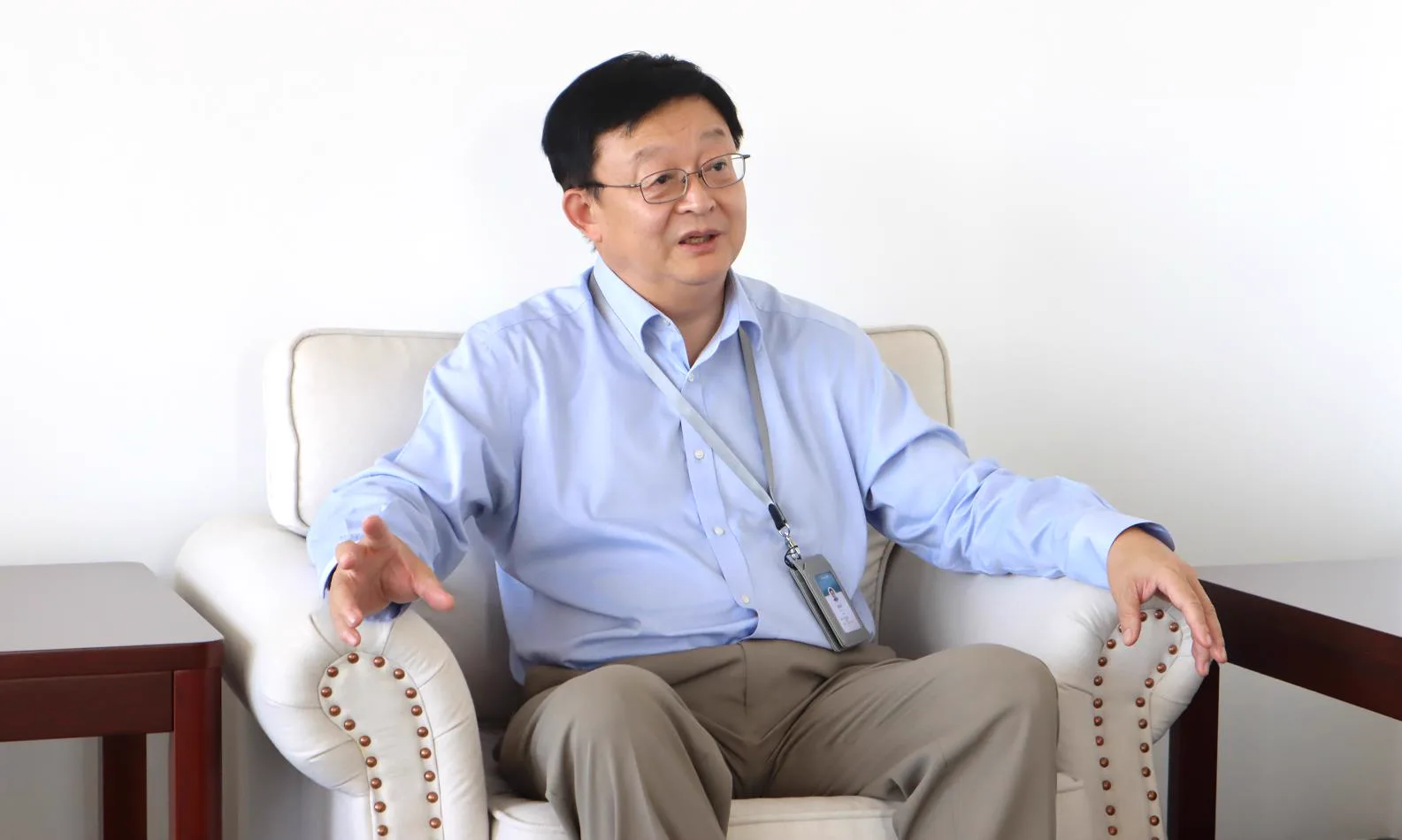
In late September, Professor Daping Chu, tenured Chair Professor at the University of Cambridge and Academic Director and CEO of the Cambridge University Nanjing Centre of Technology and Innovation, gave an exclusive interview to the Xinhuanet Jiangsu Channel on the topic of international cooperation and technology transfer and commercialisation. The full text is reproduced below:
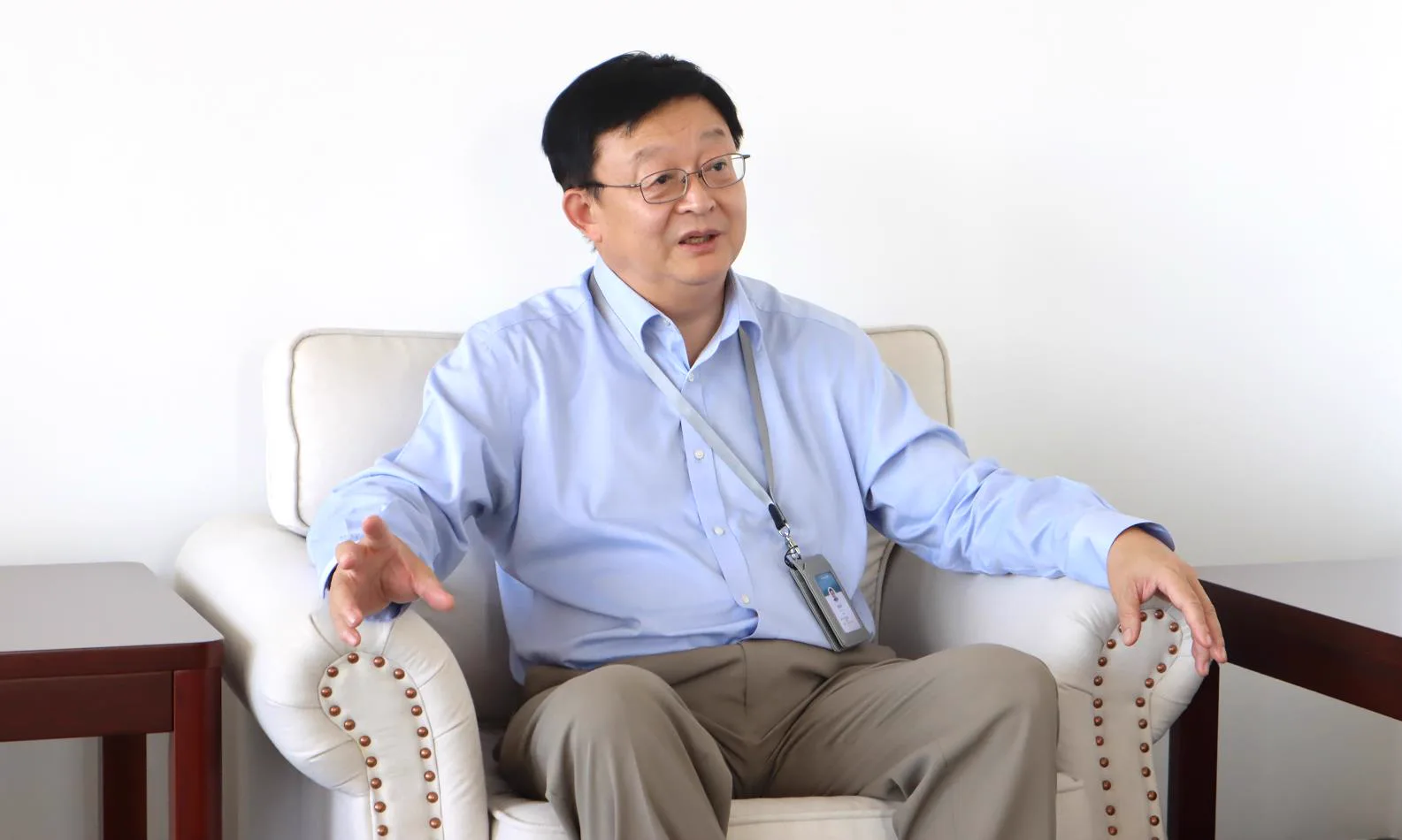
In 2018, the Cambridge University Nanjing Centre of Technology and Innovation (hereinafter referred to as the Nanjing Centre) was officially established in the Nanjing Jiangbei New Area, and in May 2019 the Centre's research projects were officially launched. After years of development, what goals and positioning has this highly watched research institution and technology transfer platform been pursuing? And which of its achievements have been effectively applied? In a recent interview, Professor Daping Chu, tenured Chair Professor at the University of Cambridge and Academic Director of the Cambridge University Nanjing Centre of Technology and Innovation, offered his answers to these questions.
Driven by Both the Need for Industrial Upgrading and the Need to Commercialise Research Results
As a supporting platform for the University of Cambridge's cooperation in China, the Nanjing Centre covers international high-end original research projects, innovative R&D, the commercialisation of research results, international academic exchange and talent development. Daping Chu said that the Centre's development is built on the mutual trust between the City of Nanjing and the University of Cambridge and on a partnership model of mutual support, equality and mutual benefit; in an era when scientific and technological innovation leads global economic development, this is a case driven both by the need for industrial upgrading and by the need to commercialise scientific and technological achievements.
In Daping Chu's view, research work can be broadly divided into three mutually reinforcing stages: basic research, original applied research and technology development. “At every stage of industrial transformation and upgrading, original research results are needed, and all of them are a reinforcement of basic research results; it takes roughly 15 to 30 years for different basic research results to be translated into application,” Daping Chu explained. Once basic research results have been translated, applied and innovative research is needed to underpin the subsequent development of technology and products. The Nanjing Centre, relying on the University of Cambridge's rich innovation experience, deep innovation foundation and leading capability in translating innovation into application, works in line with the needs of local enterprises to carry out extensive innovation cooperation across many fields, disciplines and directions without presupposing any model, cultivating innovative talent, establishing new types of R&D institutions and guiding more innovative technology enterprises to settle here.
Daping Chu said that original applied research is the key to innovation. At present, when domestic enterprises procure technology from overseas, they can often obtain only recent technologies, or even technologies that have long been in use. Starting applied research from the upstream end and pursuing original innovation is the only path to industrial transformation and upgrading and to achieving technological leadership. The University of Cambridge hopes, through the Nanjing Centre, to bring the latest and most pioneering technologies to China.
Focus Not Only on Commercialising Results but Also on Building Distinctive Strengths
In its early years, the Nanjing Centre focused mainly on directions such as biomedicine and healthcare, information technology and renewable energy, smart cities and environmental protection, and zero carbon and sustainable development, centring on Nanjing's leading industries and working with leading enterprises to carry out innovative R&D and help upgrade local industry.
According to the introduction, the two projects launched by the Nanjing Centre in 2019, “Multimodal and Hybrid 3-D Ultrasound/Photoacoustic Imaging System” and “Obesity-Related Metabolic Complications: Pathogenic Mechanisms, Diagnostic Biomarkers and Therapeutic Targets — the Chinese Paradox of Metabolically Healthy Obesity (MHO)”, focus on the development of high-end medical devices and distinctive testing and inspection, closely matching the healthcare industry positioning of Jiangbei New Area. Among the three projects approved in June 2020, “Engineering of Droplet Microfluidic Platforms and Their Biological Applications” is dedicated to solving China's bottleneck problem in biological microspheres and to developing their applications in tissue engineering; “Holographic Interferometer for 3D Surface Analysis” enables high-precision measurement of various parameters and serves the strategic plan of Nanjing Jiangbei New Area to build a “City of Chips”; and, directly addressing the era of new infrastructure, in which big data centres, as the hub of the digital economy, are the cornerstone of the rapid development of China's internet and 5G communications industries, “High-Power-Density 48V DC Converter Power Supply System for Data Centres” targets the core 48V DC power supply technology for next-generation big data centres, reducing the energy consumption of conventional data centre power systems and supporting the construction of data centres across the country.
It is worth mentioning that Dr Yuanbo Deng, who graduated from the Department of Engineering at the University of Cambridge, is the founder and CEO of REAV, an alumnus enterprise based at the Centre. It is a start-up focused on building industry-leading in-vehicle head-up display (HUD) systems and committed to deeply integrating vehicle driving information with the real-world scene during driving. At present, the team has successfully achieved ghost-free projection based on ordinary windscreens and has obtained a number of international PCT patent licences.
“The Centre must not only focus on translating results into application but also build its own distinctive strengths,” Daping Chu concluded. “It must align with industry and market needs, adhere to application-oriented original applied research as the ‘source of innovation’, give play to the unique advantages of the Cambridge Nanjing Centre, make use of innovation policy support from governments at all levels, and mobilise the first-class resources of Nanjing and of domestic and international universities and research institutes, so as to jointly build an ecosystem for the innovation value chain. Only then can the Cambridge Nanjing Centre achieve sustained high-quality development and become a world-class centre for research translation in the service of human society.”
*This article is reproduced from Xinhuanet.
相关阅读
- Roundtable Sharing | Driving the Transformation of Research Outcomes Through International Innovation, Empowering Industrial Development with Cutting-Edge Technology
- CUNJC attends the enterprise symposium of Nanjing Science and Technology Bureau
- CUNJC approved to establish Provincial Post-doctoral Innovation Practice Base